
A five-minute client call.
Ten minutes answering an email.
A quick bit of research.
A small amendment that “won’t take long”.
Individually, these tasks may not seem significant. But when they happen every day, across multiple clients and multiple members of staff, they can quickly add up.
And if that time isn’t being recorded, there’s a simple problem: You may be doing work you never bill for.
For businesses that sell professional time and expertise, accurate time tracking isn’t just an administrative exercise. It can be fundamental to understanding what work really costs, whether clients are profitable and whether the business is recovering the value of the work it delivers.
Small amounts of time can become a big problem
The biggest risk isn’t necessarily forgetting to record a three-hour project.
It’s the smaller pieces of work that happen throughout the day.
Perhaps someone spends:
• 10 minutes responding to a client query
• 15 minutes making an amendment
• 10 minutes researching an issue
• 5 minutes on a follow-up call
That’s 40 minutes of work. Do that regularly and the amount of potentially unrecorded time starts to grow.
Here’s a simple illustration.
If one employee fails to record just 20 minutes of potentially billable work each working day, over a 220-day working year that equates to approximately 73 hours of unrecorded time.
At an illustrative billing rate of £75 per hour, that time would represent around £5,500 worth of potentially billable work.
Across a team of five, the potential value becomes £27,500.
Those figures are illustrative, of course. Not every recorded minute will necessarily be billable. But they demonstrate an important point:
Small gaps in time recording can become commercially significant when multiplied across a team and a year.
Memory isn’t a time-tracking system
One of the biggest problems comes when staff are expected to reconstruct their time at the end of the day or, worse, the end of the week.
What did you do at 10:30 on Tuesday?
How long did that client call actually take?
Was that email five minutes or twenty?
Which client did you do that research for?
The longer the gap between doing the work and recording it, the harder it becomes to create an accurate picture.
Your existing TallyPro material identifies exactly this problem: short client calls, emails and follow-ups can be missed when time is tracked manually or retrospectively.
Lost hours affect more than your invoices
Missing time doesn’t only create the risk of underbilling.
It can distort your understanding of profitability.
Imagine that you charge a client a fixed fee of £2,000.
Your records show 18 hours spent servicing the account.
On paper, it might look healthy.
But what if the team actually spent 24 hours once all those unrecorded emails, calls, amendments and queries are included?
The revenue hasn’t changed.
Your understanding of the cost of delivering the work has.
That matters when you’re deciding:
• which clients and projects are profitable
• whether fixed fees are correctly priced
• how much resource different clients consume
• where workloads are increasing
• whether additional work falls outside the original scope
• how future work should be quoted
Without reliable time data, it’s far harder to answer those questions confidently.
And then comes billing time…
Poor time recording can create another hidden cost at the end of the billing period: more administration.
Instead of producing an invoice from clear records, someone has to piece together what happened.
Timesheets need chasing.
Notes need checking.
Staff have to remember what they worked on.
Entries may need correcting.
That is time the business is spending trying to work out where its time went.
The answer is visibility
This is where TallyPro comes in.
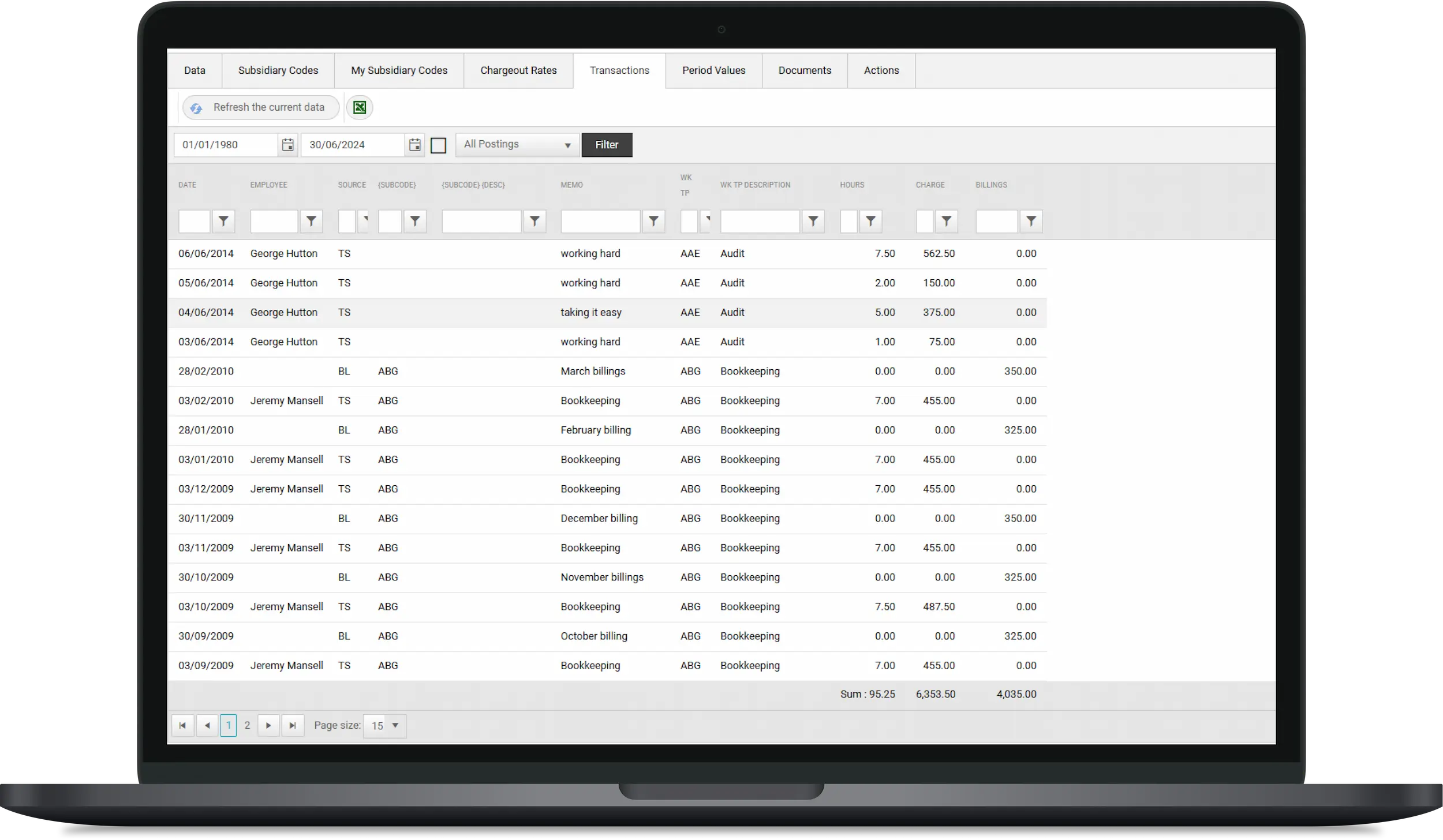
TallyPro is designed to give businesses a clearer, more consistent picture of where working time is being spent.
Rather than relying on paper, spreadsheets or people’s memories, TallyPro provides a digital approach to logging time against work, helping businesses create more organised time records and improve visibility. [08072026 W…Time.docx | Word]
And that information can become much more valuable than the timesheet itself.
Better time data can help a business understand:
Are we capturing the potentially billable work we’re doing?
Are certain clients consuming more time than we realised?
Are our fixed fees still profitable?
Where is our team’s capacity actually going?
Are we pricing future work using accurate information?
Time tracking stops being something employees have to complete for administration and starts becoming useful commercial intelligence.
Don’t let valuable hours disappear
You wouldn’t deliberately leave hours off an invoice.
But without consistent time tracking, that may effectively be what happens.
Whether it’s five minutes here or twenty minutes there, the true cost only becomes apparent when those missing minutes are multiplied across clients, employees and months.
The question isn’t simply:
“How many hours did we work?”
It’s:
“How many hours did we work that we never recorded?”
With TallyPro, businesses can build a clearer picture of where their time goes, support more accurate billing and use better data to understand the profitability of the work they deliver.
Ready to find out where your time is going?
Try TallyPro free for 30 days and discover how better time tracking can help you take greater control of your billable hours, workload and profitability. Your existing TallyPro content currently promotes a 30-day free trial.